How To Get Rid Of Crepey Skin: What Actually Helped Me

If you’ve ever found yourself Googling how to get rid of crepey skin, you are not alone. I first started noticing it under my eyes. Because I look at photos of myself often for my work, that delicate area became hard to ignore. In certain lighting, the skin looked thinner, a little more textured, and not quite as smooth as it once had.
If you are wondering how to get rid of crepey skin in midlife, the answer is rarely in one single product or quick fix.
Crepey skin is a normal part of aging, especially in midlife. Still, that doesn’t mean we have to simply accept it without exploring what might actually help. I had also dealt with loose skin on my stomach for years after losing a significant amount of body fat in my mid-40s through diet and exercise. The weight loss was positive for my health, but it did leave behind skin that felt less firm than I would have liked.
Over time, I realized that treating crepey skin requires more than a good moisturizer. Some things made a visible difference. Others did not. In this post, I’m sharing what truly helped me, from skincare ingredients that support collagen to in-office treatments like Morpheus8 and CO2 laser, so you can decide what feels right for you.
This post may contain affiliate links; if you click on a shopping link or picture and make a purchase, I may receive a small commission (at no cost to you), so thank you. I appreciate your support.
What Is Crepey Skin?
Crepey skin is skin that appears thin, fragile, and finely wrinkled, almost like crepe paper. Instead of deeper expression lines, it looks more like a delicate texture change on the surface. The skin can feel looser, less elastic, and not quite as firm as it once was.
This happens as collagen and elastin naturally decline over time. Those two proteins are what give our skin structure, bounce, and resilience. As they decrease, the skin becomes less able to snap back into place, which is when that soft, crinkled appearance can start to show.
Crepey skin is different from traditional wrinkles. Wrinkles are often caused by repeated facial expressions and tend to be more defined lines. Crepey skin is more about texture and thinness. It is especially common under the eyes, on the neck, the arms, above the knees, and on the stomach. Areas where the skin is naturally more delicate.

Sun exposure can accelerate this process, as ultraviolet rays break down collagen faster. Dehydration can also make crepey texture appear more noticeable, which is why hydration and barrier support matter more than we sometimes realize in midlife.
The good news is that while crepey skin is a normal part of aging, there are ways to improve its appearance and support long-term skin health.
What Causes Crepey Skin?
Crepey skin does not appear overnight. It develops gradually as several factors begin to overlap, especially in midlife.
Natural Collagen Loss and Aging
The biggest contributor is the natural decline of collagen and elastin. These structural proteins keep skin firm and resilient. As we age, collagen production slows down, and the skin becomes thinner and less able to hold its shape. That loss of support is what creates the delicate, crinkled texture associated with crepey skin. If you are curious about supporting collagen from the inside out, I share more in my post on the best collagen for women over 50.
Sun Exposure and UV Damage
Sun exposure is another major factor. Ultraviolet rays break down collagen at a faster rate, even if the damage is not immediately visible. Years of cumulative sun exposure can accelerate thinning and make the skin appear more fragile over time. This is one reason consistent sunscreen use is such a core part of any anti-aging routine. I share my favorite options in my guide to the best body sunscreens for mature skin and how to choose the best face sunscreens.
Dehydration and Weight Changes
Dehydration also plays a role. When the skin barrier is compromised or lacking moisture, fine lines become more noticeable, and the texture can look more pronounced. While hydration alone will not completely treat crepey skin, it does make a visible difference in how smooth the skin appears. I walk through a balanced approach to midlife skincare in my best anti-aging skincare routine for women over 50.
Hormonal changes in midlife can also contribute. As estrogen levels shift, skin naturally becomes thinner and less elastic. This is one reason crepey skin often becomes more noticeable in our forties and fifties.
Finally, significant weight loss can reveal laxity that was previously less visible. When I lost body fat in my mid-forties through diet and exercise, I was healthier overall, but the skin on my stomach did not fully tighten back the way I had hoped. That experience made me realize that skin support is different from fat loss.
Most often, crepey skin is not caused by one single factor. It is the combination of aging, sun exposure, hydration levels, and hormonal changes that gradually shifts the texture of the skin.

Where I Started Noticing Crepey Skin
For me, it started under my eyes.
Because I photograph outfits regularly for my work, I see my face in close-up more often than most people probably do. In certain lighting, I began to notice that the skin under my eyes looked thinner and more textured. Not dramatically wrinkled. Just softer. More delicate. Almost like the surface had changed.
It wasn’t something anyone else pointed out. But once I saw it in photos, I couldn’t unsee it.
That area under the eyes is naturally thinner to begin with, so when collagen begins to decline, it tends to show there first. Makeup would settle differently. Concealer didn’t quite glide the same way. The texture shift was subtle, but noticeable to me.
I had also lived with loose skin on my stomach for years after losing a significant amount of body fat in my mid-forties through diet and exercise. I was proud of the strength and health I had built, but weight loss does not always mean the skin snaps back completely. That experience helped me understand that skin elasticity and overall fitness are not always the same thing.
In both places, what I was seeing wasn’t dramatic sagging. It was texture. Thinner skin. Less bounce. That delicate, slightly crinkled quality that feels more about surface change than deep lines.
For many of us, it shows up quietly. In a photo. In bright bathroom lighting. A moment when we tilt our head just slightly and notice something new.
That quiet awareness is often what sends us searching for answers.
What Didn’t Work For Me
When I first started noticing crepey texture under my eyes, my instinct was to reach for heavier creams.
I assumed that if my skin looked thinner or more delicate, the answer must be more moisture. While hydration absolutely helps the skin look smoother, I quickly realized that thick creams alone were not enough to meaningfully change the texture.
I also tried a few “tightening” products that promised visible results in days. Some gave a temporary smoothing effect, especially under makeup, but the improvement never lasted. Once I washed my face, the texture looked the same.
Another mistake I made was expecting faster results than were realistic. Collagen loss happens gradually, and rebuilding or stimulating it takes time. I had to adjust my expectations and understand that improving crepey skin is more about consistency than quick fixes.
For my body, I initially focused only on exfoliation, thinking that smoother surface skin would solve the issue. While gentle exfoliation does help with overall texture, it does not address the deeper structural support that crepey skin needs.
Over time, I realized that treating crepey skin requires a layered approach. Hydration matters. Ingredients matter. Sun protection matters. And in some cases, in-office treatments make a bigger difference than any cream alone.
That shift in mindset was important for me. Once I stopped chasing miracle products and started focusing on realistic, supportive strategies, I began to see meaningful improvement.
What Actually Helped My Crepey Skin
If you’re seriously trying to figure out how to get rid of crepey skin on the body, in-office treatments can make a noticeable difference.
Morpheus8 for Crepey Skin
I had the opportunity to serve as a model for my plastic surgeon’s office when they were performing Morpheus8 treatments. I was not paid, but the treatment was provided in exchange for allowing them to document the process. Because of that experience, I was able to see firsthand how the treatment works and how my skin responded over time.
What The Treatment Was Like
My treatment was performed at Buckhead Facial Plastic Surgery in Atlanta, Georgia. The procedure itself did not take long. A numbing cream was applied first and needed about 30 to 45 minutes to fully set. The actual Morpheus8 treatment took roughly another 30 minutes
Recovery and Results
There was no formal downtime afterward. I came home and worked the same afternoon. My stomach was very red and warm to the touch immediately following the procedure, which is completely normal. After a couple of days, the area became itchy. I took a few Benadryl and used a cortisone cream, which helped significantly.
The redness took several weeks to fully fade for me. I was told mine lasted a bit longer than average, although there wasn’t a clear reason why. That is something to keep in mind. Everyone’s skin responds a little differently.
I began seeing visible improvement around four weeks after the treatment, and the results continued to improve over time as collagen production increased. Most providers recommend a series of three treatments spaced several weeks apart. I only had one, and I was genuinely impressed with the improvement in texture and firmness.
Here is what my stomach looked like four weeks after treatment.

I would absolutely consider doing Morpheus8 again and paying for it myself, possibly on other areas of the body.
If you are considering it, I would encourage you to ask your provider about how treatments should be spaced and how long you will need to keep the treated areas out of the sun. Proper timing and sun protection are essential for the best results.
CO2 Laser for Crepey Skin Under Eyes
If you’re researching how to get rid of crepey skin under the eyes, laser treatment often comes up, and for good reason.
I had my CO2 laser treatment performed at Buckhead Facial Plastic Surgery, the same practice where I receive my fillers and injectables. I paid for this procedure myself. The nurse who does my injectables suggested that I would be a good candidate for CO2 because I did not have excess skin that needed surgical removal. My main concern was texture.
Unlike Morpheus8, this is typically a single-session treatment.
A numbing cream was applied before the procedure, and I also chose to pay for a nerve block for additional comfort. The procedure itself was very manageable.

What Recovery Looked Like
The following morning, my eyes were extremely red and swollen. I slept with my head elevated to help minimize swelling, and each day the puffiness gradually improved. There was no pain after the procedure, just tightness and visible redness.
For the first 10 days, I followed a very specific aftercare routine. I used vinegar rinses and a salve provided by the office several times a day, followed by a layer of Vaseline to keep the area fully hydrated. Keeping the skin protected and moist during recovery is essential.
I did not leave the house for seven days, except to return to the office the day after the procedure for a follow-up. After two weeks, I began wearing makeup again and was able to cover the remaining redness with concealer.
The redness is still fading and can take up to two months to resolve completely. That timeline is important to understand before scheduling the procedure.
At this stage, I can already see improvement in texture. The skin under my eyes looks smoother and more refined. The final results continue to develop as collagen production increases.
If you are considering CO2 laser for crepey skin, plan for true downtime and strict sun avoidance. This is not a “lunch break” treatment. But for the right candidate, it can make a meaningful difference in texture without surgery.
The Skincare Ingredients That Support Collagen

While in-office treatments made the most visible difference in texture for me, consistent skincare plays an important supporting role. If you are trying to improve crepey skin, the goal is to support collagen production, protect the skin barrier, and maintain hydration over time.
Vitamin C for Collagen Support
A quality vitamin C serum is one of the most researched ingredients for supporting collagen and protecting against further sun damage. I use a medical-grade vitamin C serum in the morning now and have written more about why it matters in my post on what vitamin C serum does for your face.
Vitamin C will not completely reverse crepey texture, but it helps support long-term skin health and improves overall brightness and resilience.
Retinol and Eye Creams for Texture
Retinol remains one of the most effective ingredients for encouraging collagen production and improving skin texture over time. Used consistently and gently, it can help refine delicate areas like under the eyes.
Choosing the right eye cream also matters. The under-eye area is thinner and more sensitive, so hydration and barrier support are essential. I share what to look for in my guide on how to choose the best eye cream for you.
Hydration and Barrier Support for Crepey Skin
Hydration does not rebuild collagen on its own, but it significantly improves how crepey skin looks and feels. When the skin barrier is healthy, the texture appears smoother and less fragile.
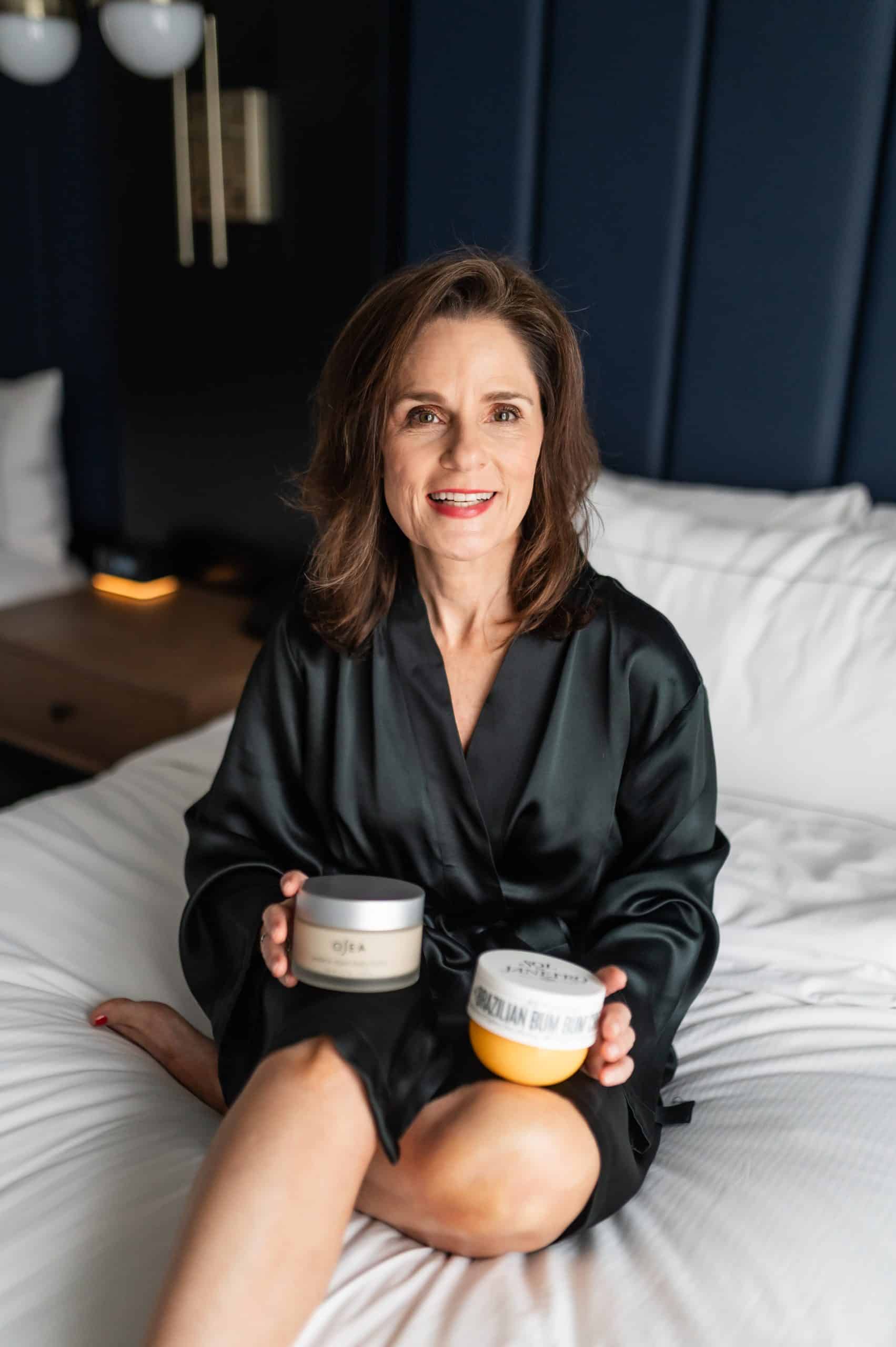
On my body, I layer the Osea Body Serum first and follow with the Osea Body Butter on my legs and stomach. The serum absorbs quickly, and the richer cream on top helps seal everything in. Used consistently, that combination has made my skin feel noticeably more supple.
For my arms, I prefer the Necessaire Body Serum. It is lightweight but deeply hydrating, which makes it easy to use daily without feeling heavy. Sometimes I will seal it with Cerave moisturizing lotion.
At night, I apply a small amount of jojoba oil to my decolletage before bed. It is simple, affordable, and closely mimics the skin’s natural oils.
If you are unsure whether a lighter lotion or richer cream is better for your skin type, I break down the differences in my post on body butter vs body lotion.
Consistent hydration, combined with collagen-supporting ingredients and diligent sun protection, creates a strong foundation, whether or not you choose to pursue in-office treatments.
Can You Really Get Rid Of Crepey Skin – And How?
This is one of the most common questions people ask when searching how to get rid of crepey skin.
The honest answer is this: you can significantly improve crepey skin, but you cannot completely erase it.
Crepey skin develops because of collagen loss, thinning skin, and changes in elasticity over time. While we can stimulate collagen production and improve texture, we cannot return the skin to what it looked like at twenty-five.
Topical skincare can help improve hydration and surface smoothness. Consistent use of ingredients that support collagen can make the skin appear firmer and more refined. In-office treatment like Morpheus8 or CO2 laser can create a more noticeable improvement by stimulating deeper structural support.
But even with treatments, the goal is improvement, not perfection.
For me, the most helpful shift was understanding that “getting rid of” crepey skin really means improving texture, supporting collagen, and protecting my skin going forward. Once I adjusted my expectations, I was much more pleased with the results I achieved.
My Honest Advice Before You Book A Treatment
If you are trying to figure out how to get rid of crepey skin, my advice is simple: start with the foundation before jumping into procedures.
Support your skin daily. Wear sunscreen consistently. Keep your skin hydrated. Use ingredients that promote collagen production. Those habits compound over time and protect the investment you make in any treatment.
I have genuinely been happy with Morpheus8 and the CO2 laser results. They improved texture in a way that skincare alone could not. But I do not rely on procedures alone. My skincare routine keeps my skin healthy and resilient.
As we age, our midlife bodies are not meant to look like they did at twenty-five. That is simply reality. But that does not mean we cannot look strong, vibrant, and well cared for.
For me, the goal is not perfection. It is maintenance.
Preventative maintenance.
Consistent habits.
Thoughtful treatments when appropriate.
That mindset has made the biggest difference of all.
Final Thoughts
If you are still wondering how to get rid of crepey skin, start with realistic expectations and consistent habits. Protect your skin daily. Support collagen with thoughtful skincare. And when appropriate, consider treatments that align with your goals and comfort level.
Midlife skin does not need to look twenty-five to look beautiful. It needs care, protection, and maintenance.
That’s the approach I take, and it has made all the difference.
If you enjoy honest conversations about skincare, procedures, and aging confidently in midlife, I would love to have you join my newsletter. I share what I am trying, what I am loving, and what I am learning. Always with transparency and experience behind it.