
Petite VS Regular Pants Sizing Guide For Women

Shopping for pants can feel frustrating when you’re petite, especially when sizing charts don’t tell the full story. Petite vs regular pants sizing isn’t just about height; it’s about how a garment is proportioned through the rise, hips, knees, and leg shape. Two pairs of pants can have the same waist measurement and look completely different once they’re on a shorter frame.
After years of trying on, tailoring, returning, and finally finding what works, I’ve learned that understanding sizing is just as important as choosing the right style. This pants sizing guide breaks down the real differences between petite and regular pants, when petite sizing actually matters, and when you can make regular sizing work.
If you’ve ever wondered why a pair of pants technically fits but still feels “off”, this guide will help you understand why and make shopping far less frustrating.
Last Updated February 2026.
This post may contain affiliate links; if you click on a shopping link or picture and make a purchase, I may receive a small commission (at no cost to you), so thank you. I appreciate your support.
What Petite vs Regular Pants Sizing Actually Means
Petite sizing is about proportion, not weight or age. In clothing, petite generally refers to women who are 5’4″ and under, but more importantly, it accounts for how clothing is scaled on a shorter frame.

In pants, petite sizing usually adjusts several key fit points. The rise is shorter, so the waistband sits at the natural waist instead of creeping up too high. The knee placement is higher, which affects how comfortable pants feel when you sit and move. The leg opening is often slightly narrower, and the inseam is shorter, so hems don’t pool or stack excessively.
Regular pants are typically designed for a taller body, which means those proportions are spaced farther apart. When petites wear regular pants, the rise can feel too long, the knees can hit in the wrong place, and the overall fit may look slouchy even if the waist fits correctly.
Understanding these differences is the foundation for buying pants that actually feel good and look right, whether you’re choosing petite sizing or learning how to make regular sizing work for your body.
How Regular Pants Fit Differently on Petite Bodies

When brands offer petites sizing, they’re not just shortening the hem. Petite pants are designed for a shorter overall frame. That means multiple points of the pants are adjusted to better match petite proportions.
For petites, the most important differences usually show up in the rise, knee placement, and overall leg shape. When those elements are scaled correctly, pants sit higher and smoother at the waist, break at the right spot on the leg, and create a cleaner line from hip to hem.
That’s why I consistently gravitate toward true petite sizing when it’s available. I’ve shared many of my go-to styles in my Best Pants for Petites post.

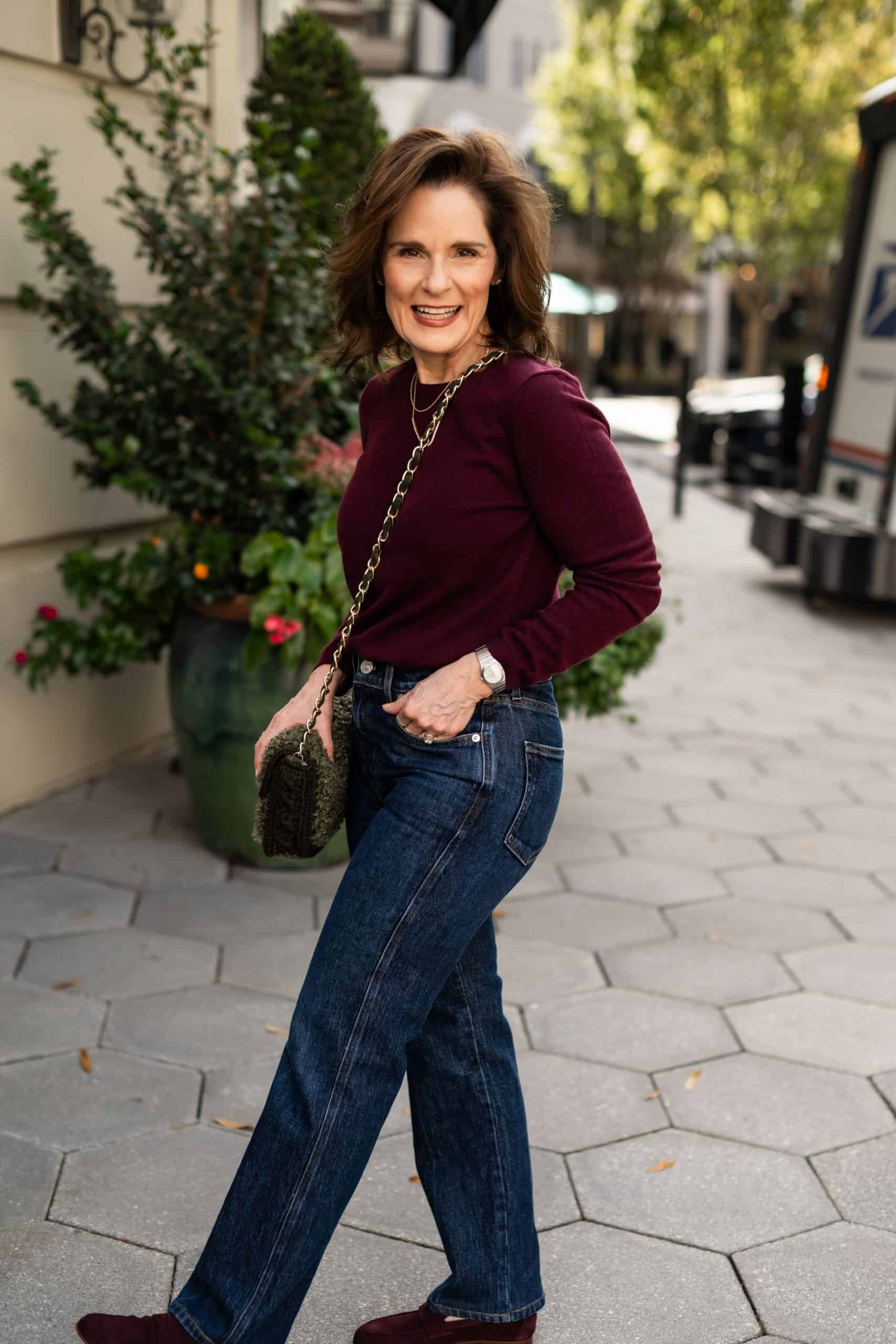
In the petite size shown here, you’ll notice that the waistband sits where it should, the pockets are placed higher and more proportionally, and there’s less excess fabric through the seat and back of the thigh. The result is a more polished fit without any pulling or bunching.
This is what properly scaled petite sizing should look like. Nothing dramatic, just quietly better.

In contrast, when I try the same pants in regular sizing, the differences are subtle but noticeable. The rise tends to sit lower, the knee placement drops, and the leg often looks longer than intended for my height.
The pants aren’t necessarily “wrong” but the proportions feel slightly off, which can make an otherwise good pair of pants look less than tailored on a petite frame.

This side-by-side comparison is why I always recommend starting with petite sizing when it’s available, especially for tailored pants. Even small proportional changes can make a big difference in how polished and confident an outfit feels.
When Regular Pants Can Still Work

There are times when regular-sized pants can work well on a petite frame, and I wear them often enough that I think it’s important to talk about when and why.
For me, the biggest factor is rise. Pants with a higher rise tend to sit better proportionally, even when they are cut for regular sizing. When the rise is right, the waistband lands where it should, which helps balance the rest of the pant.
That’s why I often reach for high-waisted styles and why I’ve shared specific tips in my post on How to Style High-Waisted Pants When Petite. A higher rise can visually shorten the torso and lengthen the leg, which makes regular sizing feel far more wearable.
Another reason regular pants sometimes work for me is brand consistency. Some brands are simply better aligned with my proportions, even when their pants are technically petite. Sezane is a good example. I wear several of their trousers and jeans in regular sizing because the rise, leg shape, and overall cut tend to work well on my frame.
If you are curious which Sezane styles I’ve had the most success with, I break them down in detail in my Sezane Trousers and Jeans for Petites post.
The key takeaway is this: regular sizing can work when the rise is high enough, the leg shape is clean, and the overall proportions don’t overwhelm a shorter frame. It’s less about the label on the tag and more about how the pant actually fits your body.
When Petite Sizing Is Worth It (And When It’s Not)
This is where I almost always recommend choosing petite sizing, especially if you’re under 5’3″ and want your pants to look intentional instead of “almost right.”

Petite sizing isn’t just about length. When it’s done well, it adjusts the rise, knee placement, and overall proportions so the pants actually work with a shorter frame. This matters most with tailored styles and workwear, where rise and knee placement need to be right or the pants will never look polished, which is why I almost always recommend petite sizing for office-ready styles and the Best Petite Work Pants for Petites.
- Tailored trousers where the rise and knee placement need to hit correctly
- Slim or straight-leg pants that show every fit issue
- Ponte and knit pants, where excess fabric can bunch or sag
- Dressy styles I want to wear with heels or polished shoes.
Ponte pants are one category where fit really shows, and I’ve shared more about why they work so well for petites in my post on Ponte Knit Pants.

That’s why you’ll see me in a mix of true petite sizing and well-done “short” length from brands that understand proportion. If the rise is right and the leg breaks where it should, I don’t worry about the label as much as the fit.
My Rule of Thumb for Choosing Petite vs Regular Pants
After years of trial and error, this is the simple rule I follow when I’m deciding whether a pair of pants is worth keeping in my closet.
If the rise sits where it should, the knee breaks in the right place, and the hem hits without major alterations, the pants work for me. It doesn’t matter if they are labeled petite or regular. Understanding petite vs regular pants sizing helps you spot fit issues before you ever try a pair on.
Petite sizing is absolutely worth seeking out for structured styles like work pants, trousers, and ponte styles where proportion really matters. But I have also learned that some regular or short lengths can work beautifully, especially in softer fabrics or more relaxed silhouettes.
What I no longer do is try to force a fit. If a pair of pants needs multiple alterations or still feels “off” once it’s on, I move on. Comfort, proportion, and ease always win.
Below are the pants I’ve kept in my closet because they consistently fit well, feel comfortable, and actually get worn. These are the styles I reach for season after season. They are not trends; they are reliable staples that work for my height and lifestyle.
Final Thoughts on Petite vs Regular Pants Sizing
Understanding the difference between petite and regular pants sizing makes shopping far less frustrating. Once you know what to look for, rise, knee placement, inseam, and overall proportion, it becomes much easier to decide which styles are worth trying and which ones to skip.
There’s no single rule that works for everyone. Some regular or short lengths can work beautifully, while true petites sizing is worth seeking out for more structured styles. The goal isn’t perfection, it’s finding pants that fit well, feel comfortable, and actually get worn.
If you are petite and building a wardrobe you can rely on, focusing on fit first will always serve you better than chasing trends.
Want More Petite Fit Tips?
If you’d like more petite-specific style advice, real-life outfit ideas, and the pieces I actually wear, I share those regularly in my newsletter.
You’ll get weekly style notes, fit tips, and curated finds delivered straight to your inbox.


This is such good information.
Sizing will never be standard, I think, so it all comes down to trying things on, eh?
OOXX
Jodie
I know. It makes it so hard to know what to order. The double and triple ordering gets old, but sometimes it’s the only way to know. Also, my size is rarely instore so that’s not a viable option.
Beth
Thank you for this article that helped me making sizing decisions much easier. Super helpful information. Grateful 😃
You are welcome. Pants can be difficult for petite women. I think I have as many regular size pairs and petite pants in my closet. Hemming is easy is all of the other areas fit right. Hope you joined my newsletter. I’m always full of tips and great finds for petites.
Beth